Flat Roof Repair in McKinney, TX
Leaks traced to the failed seam or drain, then fixed for good.
Flat roofs fail at the joints and the low spots. A commercial roofer finds the opening, fixes it, and tells you what the roof has left.
Flat-roof repair, done diagnostically
Water on a flat roof travels. It slips in at a seam, a flashing, or a clogged drain, runs along the deck, and surfaces as a ceiling stain forty feet from the entry point. Chasing stains wastes money; the repair starts with finding the actual opening.
The roofer inspects the field, the seams, the flashings, and every penetration, then closes the failure in kind: welded patches on membrane, mastic and metal where the assembly calls for it. You also get a straight read on remaining life, because a third repair on a dying roof is money that belonged in the replacement budget.
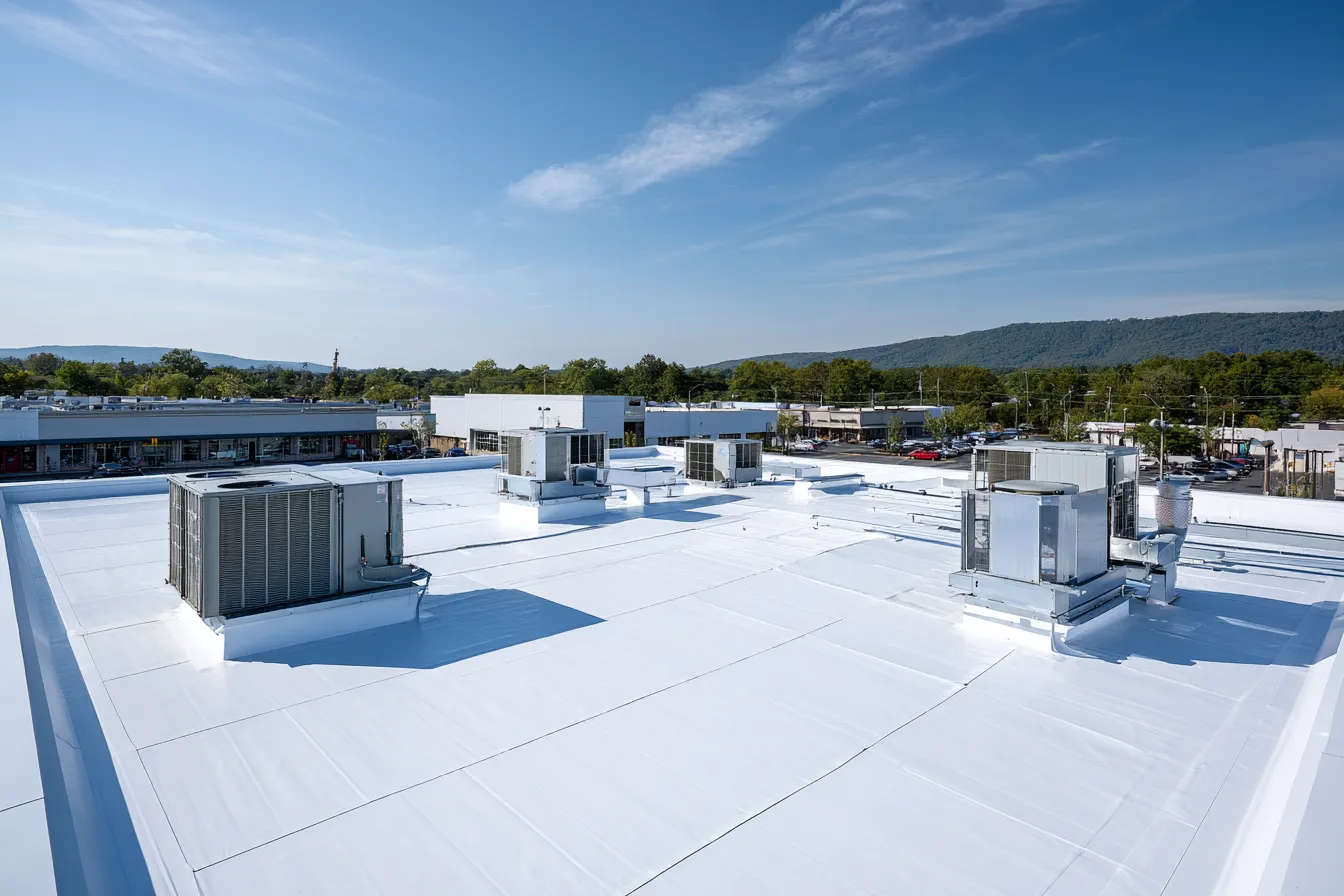
Flat-roof warning signs
Catch these early and the fix stays a fix instead of becoming a project.
Water standing for days
Ponding is the number-one flat-roof enemy and a weight problem besides.
Open or fish-mouthed seams
Joints lifting at the edge admit water long before the field fails.
Wandering ceiling stains
Stains that move between rains mean water is traveling the deck.
Blisters and soft spots
Trapped moisture underfoot says the insulation is taking on water.
How a flat-roof repair runs
Diagnosis first. Most repairs finish in a day once scoped.
Trace the entry
The failed detail located, not guessed from the stain.
Scope the fix
Repair priced against the roof's remaining life.
Close the opening
Welded, flashed, or sealed to match the existing system.
Report the rest
Photos plus a plain verdict on what the roof has left.
Flat-roof questions
What owners ask when the ceiling tiles start talking.
Stop the leak at its source.
A diagnostic inspection, a same-visit dry-in when water is coming in, and a repair scope you can trust.