TPO Roofing in McKinney, TX
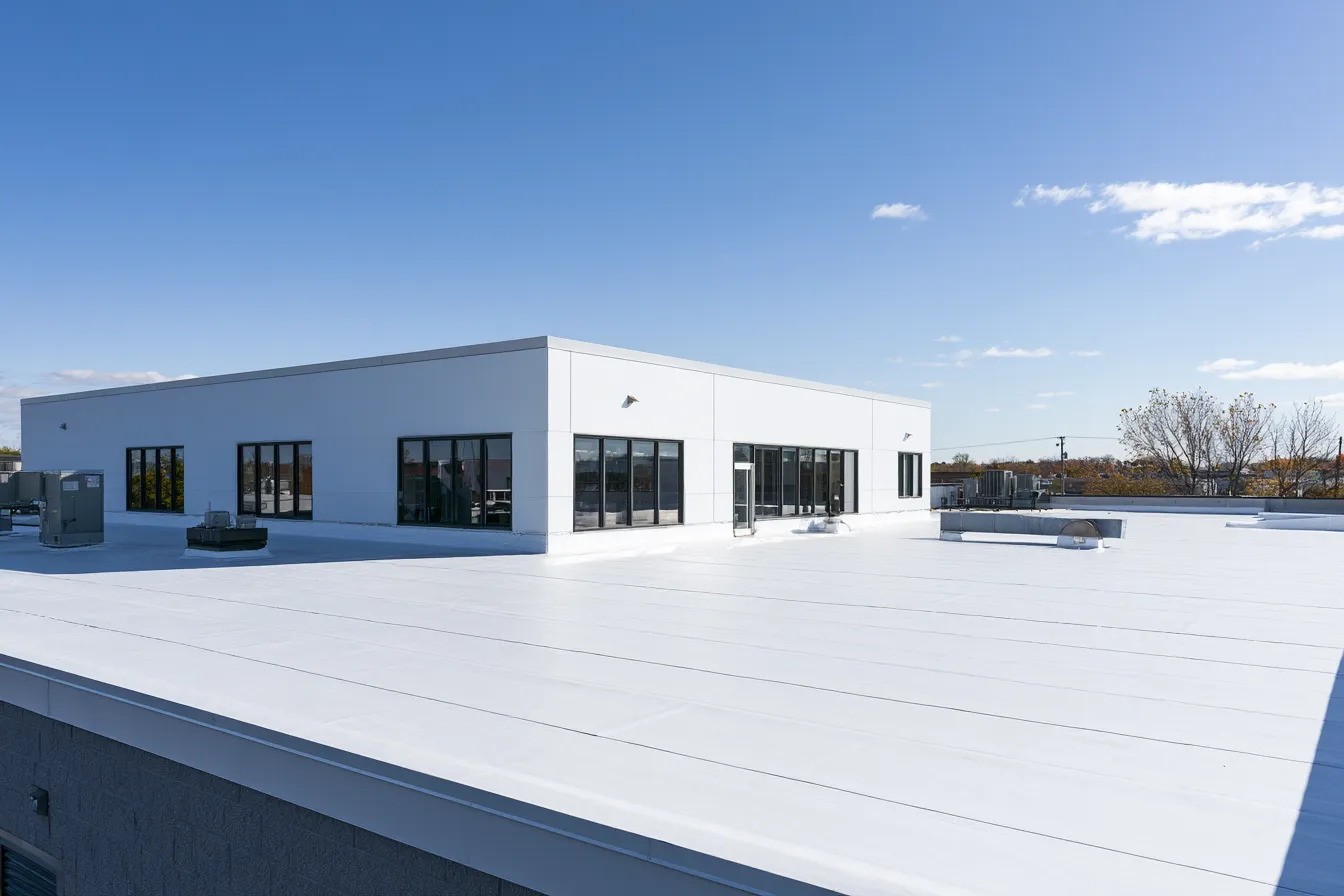
The white membrane that dominates low-slope roofs, installed to spec.
Heat-welded TPO for McKinney commercial buildings: reflective, weldable, and priced sensibly per square foot.
What TPO is and where it fits
TPO is a single-ply membrane: one flexible white sheet, heat-welded at the seams into a continuous watertight skin. It is the most common choice on low-slope commercial roofs today, and the white surface reflects Texas sun instead of soaking it in, which shows up on summer cooling bills.
Weld quality decides how a TPO roof ages, since seams are where membranes fail. The roofer installs to the manufacturer's spec, seams machine-welded and tested as the work goes, which is also what keeps the material warranty valid. Expect roughly 20 to 30 years from a well-installed, maintained system.
When TPO is the right system
Not every building wants the same membrane. TPO earns its place when these fit.
A standard low-slope deck
Offices, retail, warehouse: TPO's home territory.
Cooling costs matter
The reflective surface works hard against North Texas summers.
A 20-to-30-year horizon
Owners planning a normal capital cycle, not a century hold.
Grease or chemical exhaust
Kitchen exhaust degrades some membranes. The survey flags when a different sheet fits better.
A TPO install, step by step
Sequenced so the building stays dry and open throughout.
Verify the deck
Moisture survey and core checks before anything is ordered.
Stage the phases
Tear-off and dry-in sequenced so no section sits exposed.
Weld and test
Membrane laid, seams machine-welded and probe-tested.
Detail and document
Curbs and drains flashed, warranty registered, photos filed.
TPO questions
What owners ask before committing to a membrane.
Price a TPO system for your building.
Survey first, then a per-option scope with membrane, insulation, and warranty spelled out.