Roof Coatings in McKinney, TX
A decade or more added to a sound flat roof, at a fraction of tear-off money.
Silicone and acrylic restoration systems for commercial roofs with life left. The honest test comes first.
What a coating can and cannot do
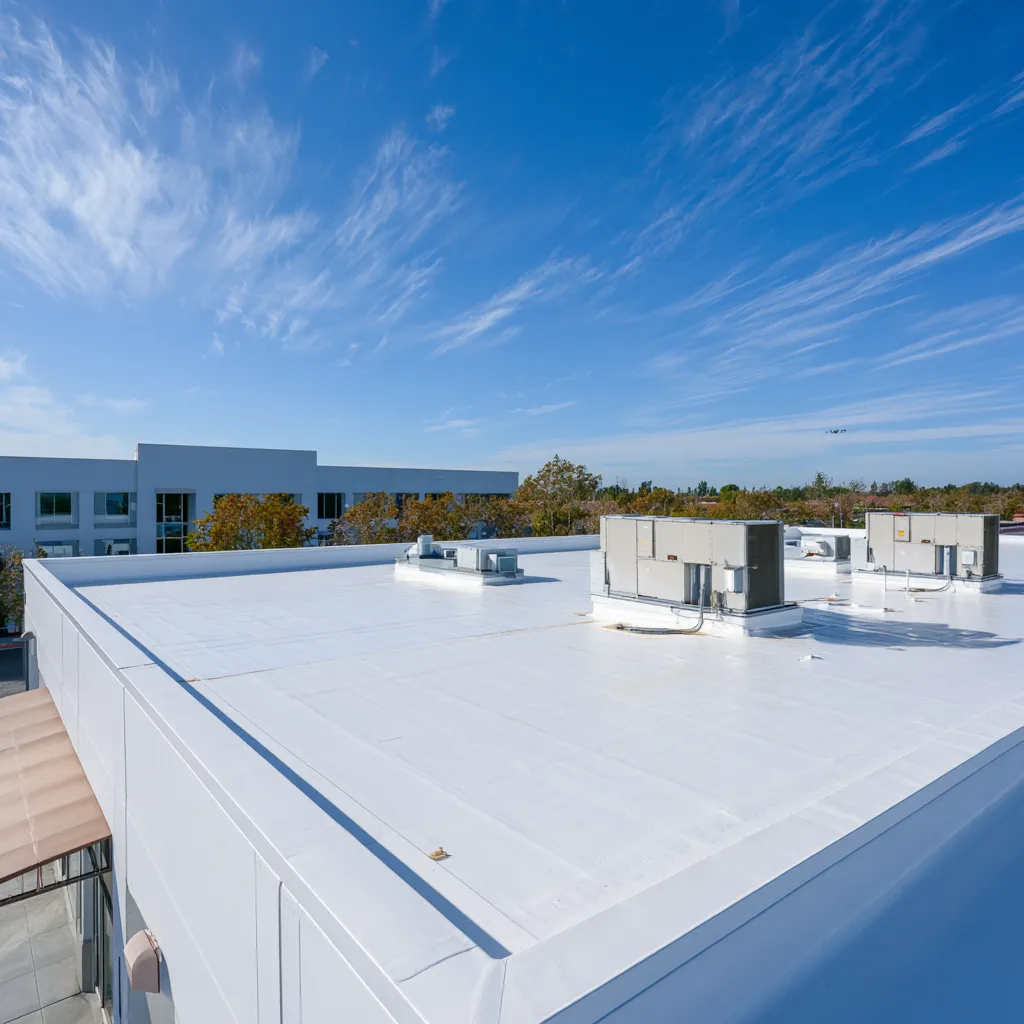
A coating is a restoration, not a new roof: a fluid-applied layer, usually silicone or acrylic, rolled or sprayed over an existing sound assembly to reseal it, reflect sun, and add warrantied years. On a roof that qualifies, it typically costs a fraction of replacement and buys a decade or more.
The qualifying is everything. The roofer tests for trapped moisture before recommending anything, because coating over saturated insulation seals water in and wastes the spend. Dry and sound: restore with confidence. Wet or failing: the money belongs in replacement, and you will be told so plainly.
Is your roof a restoration candidate?
Coatings reward the right roof and punish the wrong one. The line runs here.
Sound but aging
The membrane is tired, the insulation is dry: the ideal case.
Ponding zones
Standing water pushes the choice toward silicone specifically.
Chronic wet insulation
Moisture underfoot disqualifies coating. Replacement money.
Budget timing
Restoration can bridge a capital plan without gambling the deck.
How a restoration runs
The test can fail, and when it does, you hear it straight.
Test for moisture
The deciding gate: wet assemblies do not get coated.
Repair the details
Seams and flashings made sound before coating.
Apply to spec
The system built up to the thickness its warranty requires.
Document the system
Warranty terms and photos filed with you.
Coating questions
The restore-or-replace math, asked out loud.
Find out if restoration fits your roof.
A moisture-tested assessment and a straight answer: coat it, or do not. Priced both ways.