Clear quotes, careful roofers across McKinney & nearby.

Commercial Roofing in McKinney, TX

Flat and low-slope systems for the buildings McKinney works in.

TPO, coatings, repairs, and full replacements for office, retail, and warehouse roofs. Documented scopes, budget-grade numbers.

Request a commercial survey
Describe the building and a commercial roofer follows up to schedule it.
Scope of work

The commercial practice, in plain terms

Commercial roofs are a different trade: membranes instead of shingles, drainage engineering instead of pitch, and decisions made on budget cycles instead of weekends. The commercial roofers here work McKinney's offices, retail strips, medical buildings, and light-industrial stock along US 75 and 380.

Every engagement starts with a documented condition report: core conditions, moisture readings where warranted, photos, and a scope you can put in front of a board or an owner. The roofer prices the honest options, repair, restore, or replace, against how long you plan to hold the building.
TPO and single-ply systems
Heat-welded membrane roofs, the low-slope workhorse on new installs.
Flat-roof repair
Seam, flashing, and penetration failures found and closed properly.
Coatings and restoration
Fluid-applied systems that buy a sound roof another decade or more.
Leak response
Interior drips traced to the failed detail, not guessed at.
Preventive maintenance
Scheduled inspections and drain care that stretch every system's life.
Re-roof and tear-off
Full replacement when moisture surveys say the old assembly is done.
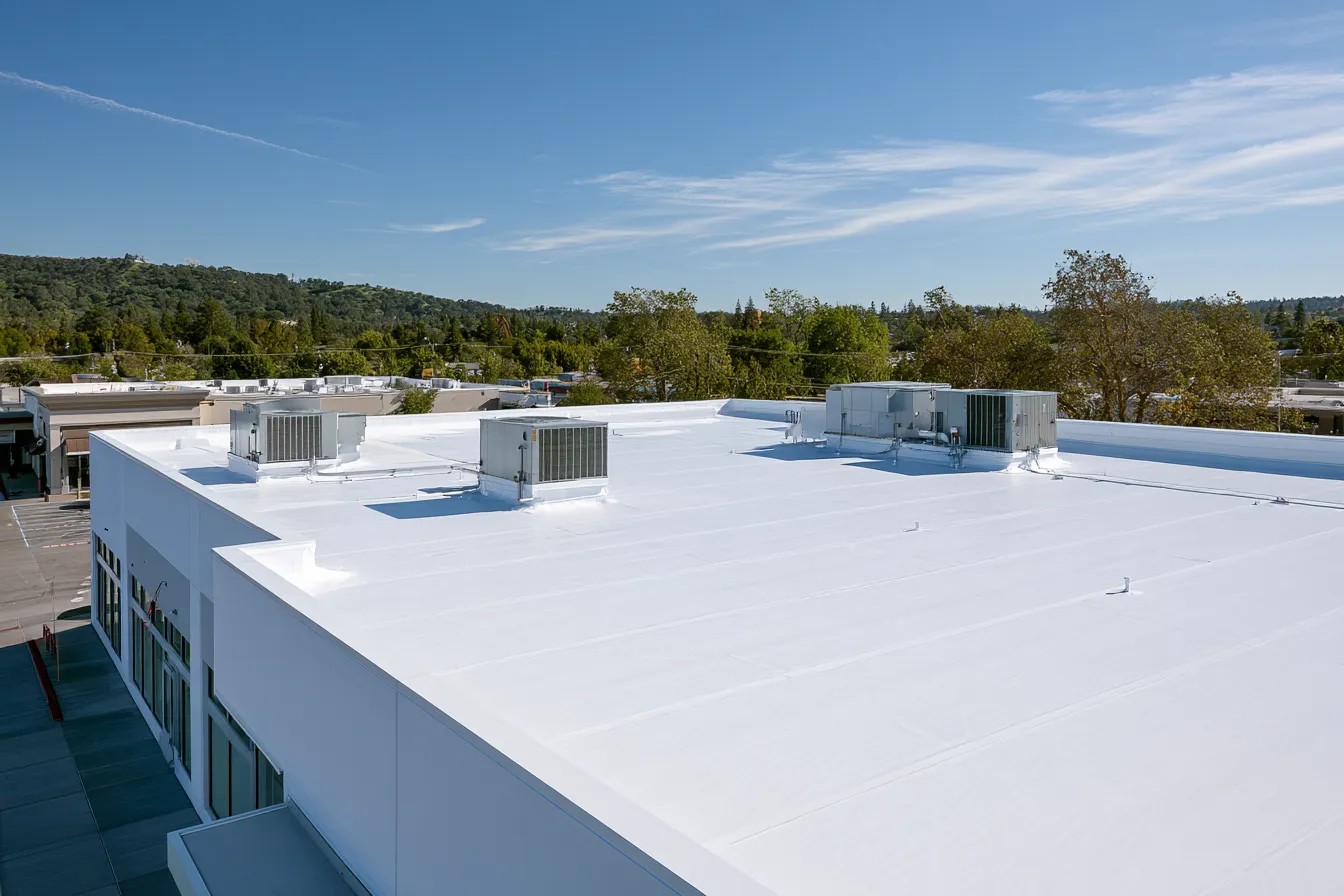
Single-ply membrane covering a commercial flat roof with air handling units
When to replace

What building owners call about

Low-slope roofs fail at the joints and the low spots. These are the usual openings.

Ponding after rain

Water still standing two days later is aging the membrane fast.

Seams lifting at the edges

Membrane joints and flashings open long before the field wears out.

Stains under the deck

Ceiling tiles map the leak, though rarely straight up from the source.

An aging, unknown roof

New building, no records: a condition report resets the clock.

How it works

How commercial work runs

Documented at every step, because your board, lender, or insurer will ask.

1

Survey the roof

Cores, moisture readings, photos: the real condition on paper.

2

Scope the options

Repair, restore, or replace, each priced against your hold plan.

3

Execute to spec

Installed to manufacturer requirements so warranties actually apply.

4

Close the file

Warranty documents, photos, and a maintenance plan handed over.

Commercial roofing questions

What McKinney owners and property managers ask first.

Both directions. A single strip-retail unit gets the same documented survey a distribution roof would. Most of the commercial work in McKinney is mid-size: offices, retail, churches, and shop buildings, not skyline projects.
Moisture first. A coating only makes sense over a dry, sound assembly, so the survey checks for saturated insulation before anything is recommended. Dry roof, tight budget: coatings stretch it. Wet insulation or a failing deck: replacement money is the honest answer.
By the square foot and by the system, and the real quote follows the survey rather than preceding it. Budget-grade numbers land after the condition report, priced per option, so an owner can plan a capital cycle instead of absorbing a surprise.
Two parties, neither of them us: the membrane manufacturer covers the material, and the roofer covers the workmanship. Stronger manufacturer programs require certified installers, which is a real reason the choice of roofer matters. Ask what program your roof qualifies for.
Usually, with staging. Membrane work is quieter than tear-off, and the roofer sequences loud phases and access around your hours. The scope covers the disruption plan up front, not after the tenants complain.
Ready to get started?

Get your building's roof on paper.

A documented condition survey and a scope you can budget against, whichever direction the roof needs.

Free Quote